
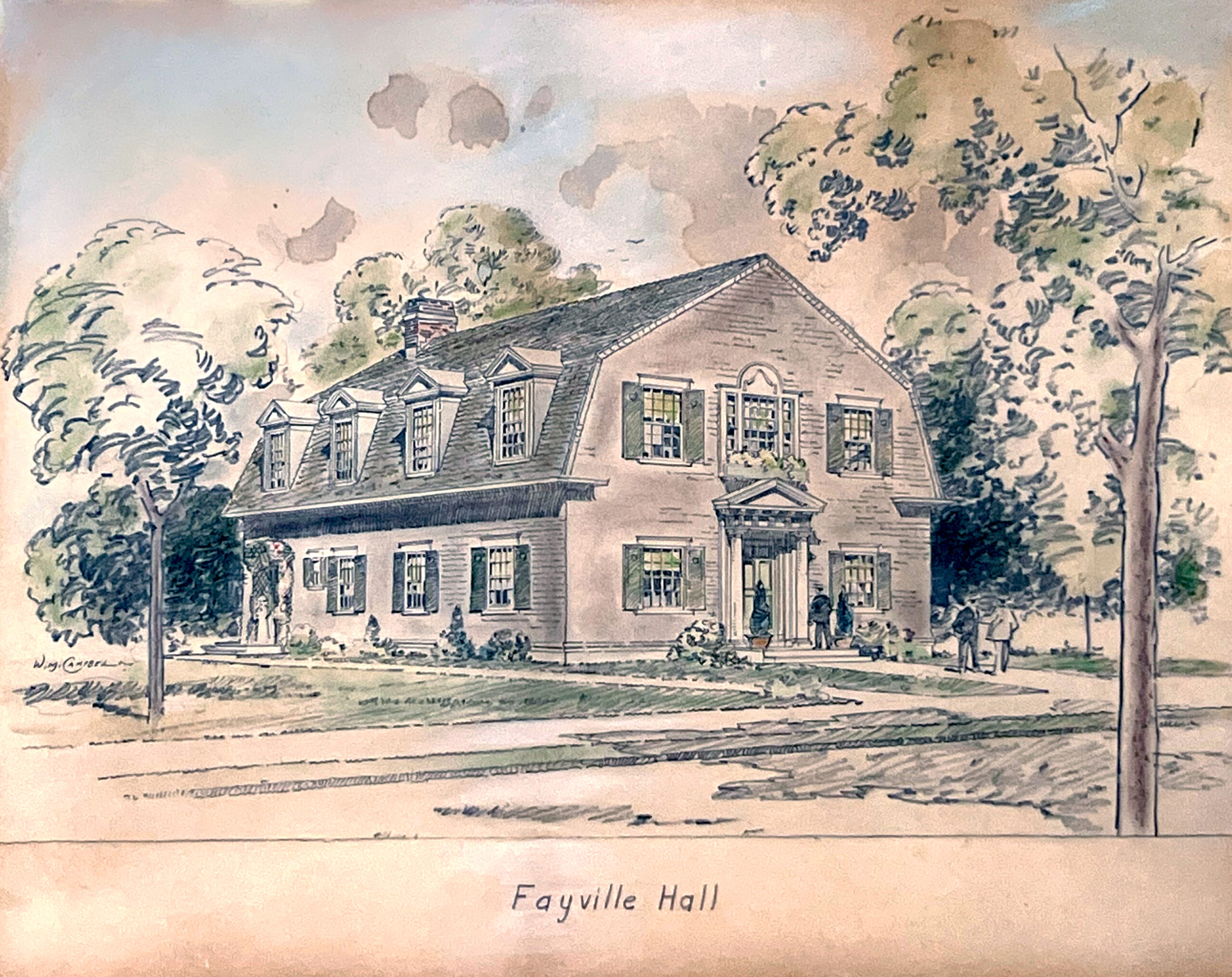
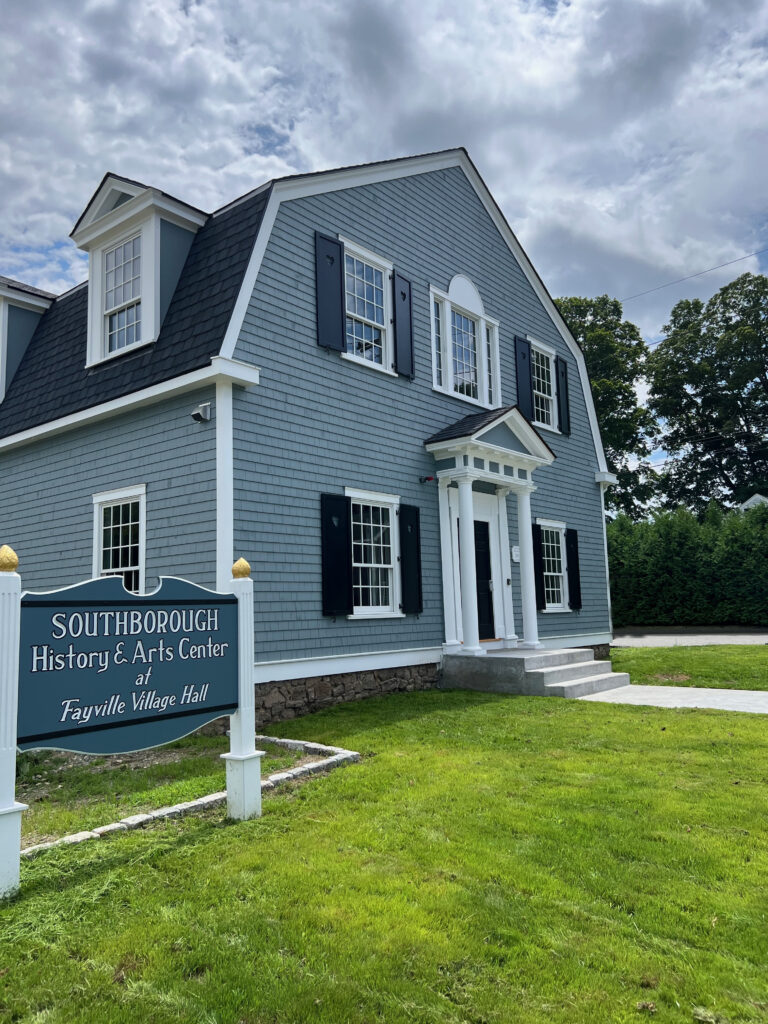
Fayville Village Hall was constructed in 1911 in the village of Fayville of of the four villages of the Town of Southborough, Massachusetts, replacing the previous GAR Hall that was destroyed by fire in 1896.
The building was designed in the Dutch Colonial Revival, notable for its distinctive gambrel roof, making it the only example of this architectural style in Southborough.
The builders’ intentions were two-fold. Fayville Hall was constructed to serve as a meeting room for Southborough Post 44 of the Grand Army of the Republic (GAR) as well as to provide social space for the residents of the village of Fayville.
Sometime later it was decided to upgrade Fayville’s fire protection, and to that end a large ell was built at the rear of the building to house fire apparatus. (This last was removed in the late 1990s.)
Fayville Hall featured (and now does again!) a large assembly room on its second floor, which became a central gathering place for community events and activities. During the Spanish Flu epidemic in 1918, the building was converted into a field hospital to nurse ailing residents. Over the years the hall has hosted concerts, meetings, dances and other social fuctions, as well as various town offices—and even for a time, a branch of the town library.
Over its more than 100 years of use, Fayville Hall hosted numerous civic and social functions, solidifying its place as a community landmark.
In 2020 the Southborough Historical Society made a several million-dollar commitment to protect and preserve this historic landmark, re-imagining and repurposing the building as a History and Arts Center for the town
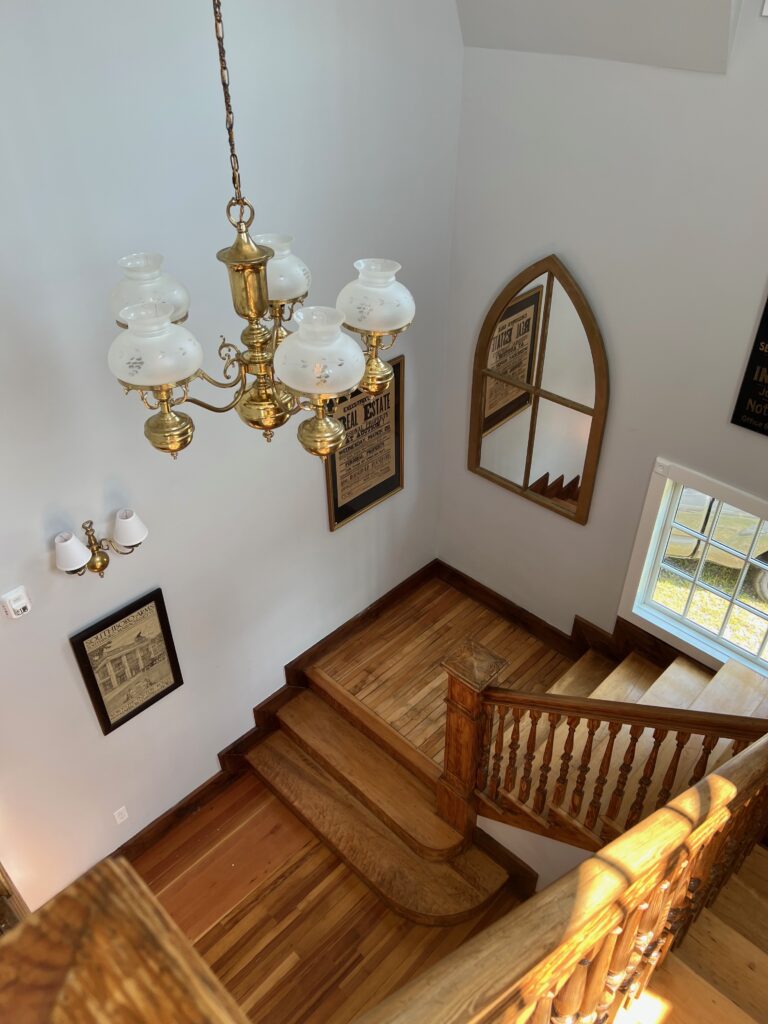
The restoration process —finally finished after four grueling years in 2025— revealed challenges, such as a spring in the basement and extensive structural deterioration. Original features, including the hardwood floors and the grand staircase from 1911 seen below, have been meticulously preserved and restored.
Today, Fayville Village Hall stands as a testament to our town’s civic spirit and architectural heritage, preserving the best of the past for our future.
.